


Appeals Court Rules that DNR Must Consider Climate Smart Alternatives to Legacy Forest Logging
John Talberth • February 17, 2026
DNR is now 0-3 in forest-climate litigation on this issue. But will the agency change behavior?
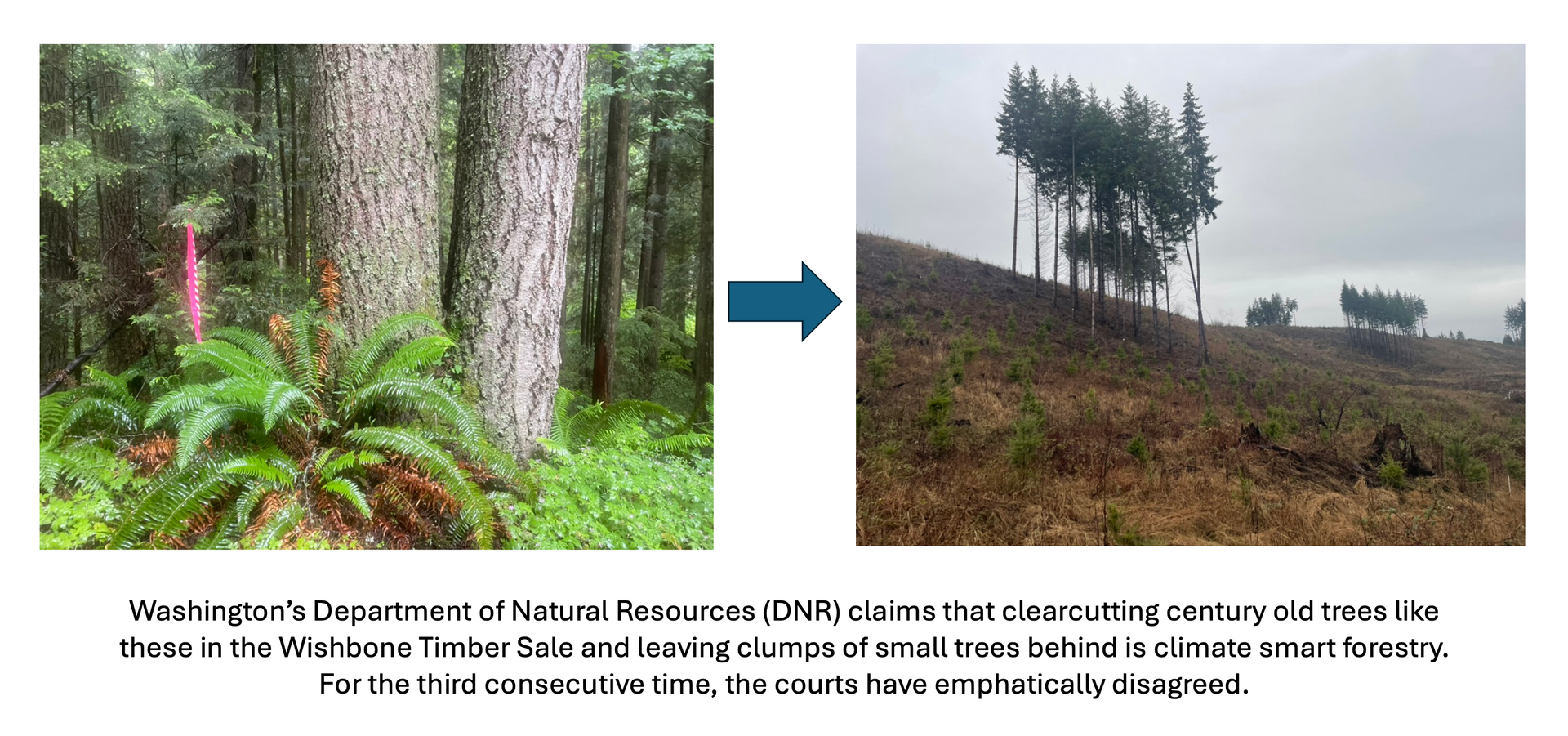
For the third consecutive time a Washington court has ruled that the Department of Natural Resources (DNR) must study alternatives for reducing climate damages associated with logging mature ‘legacy’ forests on state forestlands. In a unanimous decision, the Division One Court of Appeals affirmed King County Justice Kristin Ballinger’s May 2024 ruling that DNR violated the State Environmental Policy Act (SEPA) by failing to consider alternatives that include setting aside the mature, structurally complex components of its timber sales as forest carbon reserves, limiting logging to variable density thinning of younger plantation trees, building no new roads and earning revenues from carbon markets. In its Opinion, the Court did not agree with plaintiffs Center for Sustainable Economy, Save the Olympic Peninsula and Legacy Forest Defense Coalition about the need to do a site specific analysis of climate impacts, but did agree that the alternatives analysis is required because clearcutting big old trees that are just now entering a period of maximum carbon sequestration precludes their use as forest carbon reserves that can pull carbon out of the atmosphere for centuries.
In its precedent setting decision, the Appeals Court found that "Certainly, cutting down the trees precludes their use as carbon reserves, which is not just a theoretical use. We conclude that the alternatives analysis under RCW 43.21C.030(2)(e) applies to the Wishbone Timber Sale." The Court also dismissed DNR's claims that its generic environmental checklist (which still excludes climate impacts) is somehow related to an alternatives analysis. The Court found that "DNR claims, with no supporting authority, that the environmental checklist is an accepted form of alternatives analysis under RCW 43.21C.030(2)(e) because its purpose is “to reduce or avoid impacts from the proposal, if it can be done.” See also WAC 197-11-960. We reject this argument because doing so would render RCW 43.21C.030(2)(e) superfluous and allow DNR to disregard alternative uses proposed during the comment period."
Prior to the King County suit, plaintiffs also won a similar ruling by now retired Judge Keith Harper in Jefferson County. But instead of complying with these rulings DNR chose to engage in a costly and protracted appeals process that concluded today with the ruling against them.
According to Dr. John Talberth, President and Senior Economist at the Center for Sustainable Economy (CSE), “Three strikes and you’re out should apply in this situation. Instead of ignoring court orders, DNR now has a clear responsibility from a higher court to do what the law requires and begin to scale back the senseless destruction of century-old forests at a time when we need those trees to stay on the land to capture and store carbon at a rate that surpasses nearly every ecosystem on Earth. This means looking for reasonable, climate smart alternatives to every timber sale.”
According to Michael Rea, lead attorney for the plaintiffs, “"The Court of Appeals handed conservationists a partial, but significant legal victory. Plaintiffs challenged the Wishbone timber sale on grounds that clearcutting old growth or legacy trees precludes their use for mitigating climate impacts, and that DNR is obligated under SEPA to consider alternatives when such preclusion is at issue. The court agreed. The era of DNR defaulting to clearcutting as opposed to considering climate smart alternatives must end, as required by SEPA."
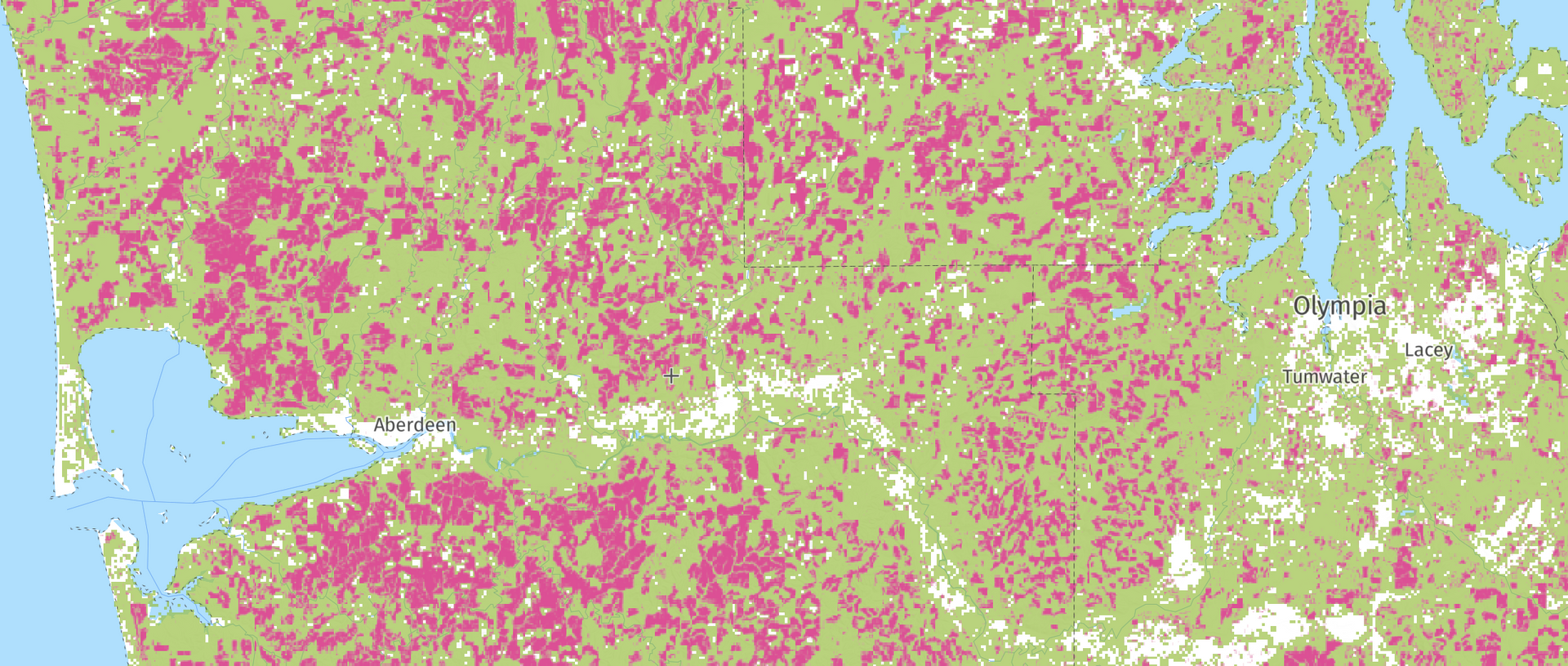
In response to the ruling, CSE sent a letter to Commissioner Upthegrove and other members of the Board of Natural Resources asking for a pause on 12 new timber sales that include logging of mature legacy forests and construction of new logging roads. In each case, CSE submitted extensive comments on the draft SEPA analyses calling attention to the fact that DNR failed to take any steps to understand climate harms
“We have offered to work with DNR to study and research alternatives to these sales to reduce or eliminate their climate impacts,” Talberth continues. “But if the agency continues to violate the law we will be forced to go back to court and seek injunctions against logging and road building activities that are amplifying the risks climate change poses to all of us.”
Read: